Posts

Peirce’s Triadic Model – Interpreting Signs

Image
A sign or  a symbol? Image by Lesley Lanir  When Ferdinand de Saussure was formulating his two part ‘dyadic’ model of the sign, consisting of a ‘signifier, or  the form that a sign takes, and the ‘signified,’ or concept  it represents, American, Charles Sanders Peirce (1839–1914) was theorizing his own model of semiotics and signs. In contrast to Saussure’s model, Peirce formulated a three-part triadic model consisting of an interpretant,  representamen, and an object. Symbols according to Peirce. Diagram Lesley Lanir By examining the relationship between objects, interpretants, and representamens and, in particular, the way the referent determines the sign, Peirce also distinguished three main ‘modes’  into which signs can be assigned: symbol, icon and index. Example of  an iconic sign. Image by Lesley Lanir Iconic signs according to Peirce. Diagram Lesley Lanir Example of an indexical sign. Image by Lesley Lanir I...

Interpreting signs – Charles Sanders Peirce

Image
We are surrounded by numerous types of signs and sign systems that we may not be fully aware of. How we interpret these signs and react to our understanding of them gives them meaning. Charles Sanders Peirce (1839–1914) formulated the innovative triadic model of the sign, emphasizing in his theory that the way we interpret a ‘sign’ is what allows it to be signified – what gives it its meaning. Therefore, when creating a sign system the main attributes of any sign need to be clear enough to relay their intended meaning, or else they will be valueless. What are signs? Peirce’s theory does not focus on just material or concrete signs, but any kind of sign. For example, if a bus driver announces that the next stop is Central Station and a passenger rings the bell, lighting up the ‘stop’ sign  – then the sign system here has been understood. The message contained  in the driver’s announcement is the sign that he will drive straight past that terminal if no one responds. H...

Intertextuality - Is your work original?

Image
Texts – built from other texts. Image by National Library in Paris The theory of intertextuality is based on the idea that all signifying systems are a product of previous signifying systems; it proposes that texts are not the original product of one author, but of their connection with other texts, both written and spoken, and to the structure of language. The idea of intertextuality, a concept originated by French semiotician Julia Kristeva in the late 1960s, was founded on Ferdinand de Saussure’s  (1857-1913) theories of semiology and Mikhail Bakhtin’s  (1895-1975)  interests in the social aspects of language and his ideas of dialogism which he theorised in the 1920s. The founder of modern linguistics, Ferdinand de Saussure, viewed language as a socially-conceived structured system of elements, rules, and meanings. His theories of signs inspired the idea of structuralism, “the belief that phenomena of human life are not intelligible except through their interrel...

Roland Barthes - Changes in approach to reading - work to text

Image
What are you really reading? Image by  Pedro Ribeiro Simões How do you approach reading? Do you passively consume the words on the page or screen in front of you, or do you interact with the writing? Linguist Roland Barthes had something to say on our conception of written language. French Philosopher, Linguist and Semiotician Roland Barthes (1915-1980) was one of the leading structuralist thinkers of the 20th century. He built his concept of the transformation of our approach to literary works based on the theories of Ferdinand de Saussure (1857-1913), Julia Kristeva, and Mikhail Bakhtin (1895-1975). Barthes noticed back in the 1970s that a change was taking place in how we approach language and literary written works, pointing out that disciplines were breaking down their borders and beginning to interact. Barthes viewed this move as part of the development of thought on  linguistics, anthropology, Marxism, and psychoanalysis – and he pointed out that the adjustment ...

Transtextuality - What are you really reading?

Image
Palimpsests. What are you really reading? Image by Adam Jones How do you read texts? Are you sure your interpretation and understanding of what you are reading is only coming from the text in front of you or is some of the meaning being transferred from elsewhere? The idea of transtextuality suggests that it is. French literary critique Gerard Genette (1930) took the idea of Bakhtin and Kristeva’s concept of intertextuality - that texts are not the original product of one author- one step further; his work Palimpsests proposes and defines ‘transtextuality’ as a more comprehensive term that determines “all that which puts one text in relation, whether manifest or secret, with other texts.” In other words, Genette’s theory of transtextuality describes the numerous ways a later text prompts readers to read or remember an earlier one. He puts forward five types of transtextual relations which I have described in my article for Decoded Science , " What is Transtextuality? Unde...

Thank You For The Music - Jennifer Young

Image
Scottish author and writer, Jennifer Young has been writing all her life. Over the years,  she has published enough work to justify her membership to both the Romantic Novelists’ Association and the Society of Authors. Her romantic novel, "Thank You For The Music," is set in Scotland and on the Balearic island of Majorca. This a book of romance and relationship choices interlaced with deeper contemporary topics. Jennifer Young,  began her writing with short fiction and poetry; however, with time, her short stories lengthened into novels. As Jennifer's interests developed, so did her writing and at university she moved into journalism and travel writing .  Later an Open University geosciences degree took this versatile writer into the genre of science writing . Read more: about Jennifer here .

Doris Lessing, R.I.P.

Image
Doris Lessing, the Nobel prize-winning British author of over 50 novels, has died, aged 94. Doris Lessing. Image by Elke Wetzig Doris Lessing , born Doris May Tayler in Persia (now Iran) on October 22, 1919, has died, aged 94. Her parents were British and in 1925, the family moved to the British colony in Southern Rhodesia (now Zimbabwe). At aged thirteen, she left school. She has been quoted as saying that "unhappy childhoods seem to produce fiction writers." In 2007, aged 88, she was awarded the Nobel prize in literature and was described by the Academy as "that epicist of the female experience, who with scepticism, fire and visionary power has subjected a divided civilisation to scrutiny." Famous for The Golden Notebook , 1962,  The Grass Is Singing , 1949, and numerous other works, her most recent novel is Alfred and Emily , 2008, which she had said would be her last book. Read more about Doris Lessing at Author Doris Lessing 'prolific and uncon...

Shakespeare Lover? Don't Miss the Canadian Stratford Festival

Image
Romeo and Juliet. Image Frank Dicksee Love Shakespeare or just enjoy seeing fine productions of classic plays?  If you are in the area, you should pop along to the Stratford Festival in Ontario. For decades the Stratford Festival has produced stimulating, thought-provoking productions of Shakespeare’s plays and other classical works.   It's 2013 performance list includes Romeo and Juliet , Merchant of Venice , Othello and Measure for Measure . Check out their visitor information for location, accommodation and dining and  calendar of events to select and book in advance what great performances you want to experience while you are there.

Everything about Shakespeare for Kids and Adults

Image
Shakespearean actor Ben Crystal as Hamlet. Image Ben Crystal . William Shakespeare's work can be a bit tricky for people of any age to fully comprehend but if taught in the right may or made accessible kids may get to enjoy the Bard's work. The following links may lead you to resources that can help kids reach and understand Shakespeare's classic, well known plays and poetry and help adults too.   Shakespeare Websites for Children   Shakespeare for Kids - Games, colouring, activities, mazes. ShakespeareKids - An introduction to the world of Shakespeare for kids No Sweat Shakespeare - Shakespeare's plays designed to be read by kids. Online Resources for Parents and Teachers In Search of Shakespeare  - A Public Broadcasting Service resource for educators. The Complete Works of William Shakespeare - The complete plays and poetry of William Shakespeare, nicely organised into genres - comedy, history, tragedy, and poetry. The Reduced Shakespeare Company ...

Hotel du Lac – Marriage Proposals and Problems

Image
Marriage proposals and problems. Image by Imagaday In Anita Brookner's, Hotel du Lac , Edith Hope's approach to relationships with men exposes her underlying need to opt for a stereotypical female role. Edith Hope, through her discriminating physical observations of the female patrons of Hotel du Lac, stereotypes defines the boundaries of her own sex. In addition, her approach towards men reveals her willingness to succumb to a woman's stereotypical secondary role. Stereotypical Female Behaviour Edith’s attitude throughout her liaison with David highlights the ease with which she compromises her physical and mental space. “Out of love for him” (114), Edith adapts her personality and schedule to suit his needs for “she knows he [is] a man who [cannot] deny himself anything” (86). Edith also adopts a nurturing role by concentrating their relationship around “‘food fit for heroes’” (29); she spends “the daylight hours... waiting for him” (30), and she “behave[s] w...

Hotel du Lac – Perfect Place for Stereotypes

Image
Stereotypes? Image by Imagaday In Anita Brookner's novel, Hotel du Lac, the attitude and narrative of romantic novelist, Edith Hope, correspond with society's stereotypical view of women. For Edith Hope, the romantic novelist of Hotel du Lac, writing offers a form of self-expression through escapism. Through this medium Edith exposes the limits of her experience and imagination. A woman unequipped psychologically to fight against tradition, she complies with and supports social norms through the content of her work. Edith's Novels Support Cultural Prejudices Edith’s narratives of love and romance disregard women in positions of power; instead, they fuel gender role socialisation by reinforcing societal myths. Through her novels, Edith recreates the ideal world she craves for, an environment overflowing with love and protection: “[Edith’s] idea of absolute happiness is to sit in a hot garden all day, reading, or writing, utterly safe in the knowledge that the person...

Banned Favourite Classic Books

Image
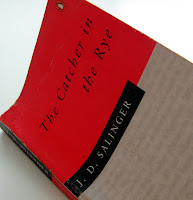
The Catcher in The Rye. Image Lesley Lanir Did you know that each year hundreds of attempts are made to remove contemporary and classic books from school reading lists and libraries? When books are removed this restricts the access of these crafted works to others. Each year, the The American Library Association's Office for Intellectual Freedom records hundreds of attempts by individuals and groups to have books removed from library shelves and from classrooms. The ALA publish an annual list of those books which have received the most reports. They also publish a list of the most challenged classics , many of them you have read, here are the top 20: 1. The Great Gatsby, by F. Scott Fitzgerald 2. The Catcher in the Rye, by J.D. Salinger 3. The Grapes of Wrath, by John Steinbeck 4. To Kill a Mockingbird, by Harper Lee 5. The Color Purple, by Alice Walker 6. Ulysses, by James Joyce 7. Beloved, by Toni Morrison 8. The Lord of the Flies, by William Golding 9. 1984, by George Orwell 11....

Top 10 Banned and Challenged Books 2012

Image
Books - challenged and banned. Image Lesley Lanir Did you know that libraries and schools in the US receive requests to have undesirable books removed from their shelves or even banned. Every year banned book lists are complied by The American Library Association. The ALA has released its annual " State of America’s Libraries Report 2013 " and one of the topics covered in the report is the "Banned Books Top Ten List of Frequently Challenged Books." This lists the top ten books that people have requested not to have on their library shelves or on the school curriculum. The top 10 banned book list is put together annually by the ALA Office for Intellectual Freedom (OIF). OIF collects reports on book challenges from librarians, teachers, concerned individuals and press reports. Regarding banned and challenged books the ALA state that: "A challenge is an attempt to remove or restrict materials, based upon the objections of a person or group. A banning is the remova...

Hotel du Lac – Confined Women and Motherhood

Image
Image by David Martyn Hunt How can we see the spatial impact of social pressure in Hotel du Lac through motherhood? Hotel du Lac , by Anita Brookner, gives insight into the stereotypical thinking and behaviours that women adopt in order to conform to society's demands. Although at different ends of a continuum, young, beautiful, anorexic Monica and Mrs. Pusey, a widow of “indeterminate age” (17), are both victims of a system controlled by patriarchy. Worthless Widows Mrs Pusey was raised in an era which conditioned young women to become wives and mothers and left them with what Florence Nightingale refers to in her 'family manuscript,"Cassandra," “nothing to do” (Norton 1606). Mrs Pusey’s life echoes the words of Florence Nightingale who asked, “Why have women passion, intellect, moral activity - these three - and a place in society where no one of these three can be exercised?” (Norton 1606). Once married, Mrs Pusey became “completely preoccupied with t...

Hotel du Lac – Space and Social Pressure - Anorexia

Image
Tall, thin, beautiful anorexic . Image by Rega photography The female characters' traits in Anita Brookner's novel, Hotel du Lac, allow the reader to understand how society forces women into stereotypical behaviour. Edith Hope, along with the other female guests of Hotel du Lac, exemplifies not only gendered stereotypes but also the fact that despite societal reforms women continue to be marginalised. Tall, Thin, Beautiful Anorexic Edith’s character traits and those of her fellow female guests clearly reveal the effects of environmental constraints. Hidden behind make-up and sophisticated composure, Monica, “the tall thin beauty” (66) “has what is politely referred to as an eating problem” (80). According to Bertram Cohler and Henry Grunebaum, in The Psychology of Mothers, Grandmother, and Daughters: Personality and Childcare in Three Generation Families, 1981, “a [young] woman who shows . . . hunger disturbance . . . is likely to have had a mother who could no...

Hotel du Lac - Social Pressure - Lost Lonely Women

Image
Exiled to A Swiss hotel by a lake. Image by Ted Drake Anita Brookner's Booker Prize winning novel, Hotel du Lac, reveals how a woman's mental and physical space are limited so as to conform to societal norms. In Anita Brookner’s novel,   Hotel du Lac , 1993, the friends of the protagonist, Edith Hope, a romantic novelist, have exiled her to a Swiss hotel so she can reflect on her ‘misdeeds.’ Considering her apparent 'rebellious' nature, how and why does Edith fit into her new environment? Hotel du Lac Guests are Lonely Women Hotel du Lac’s “recommended” visitors (23), the majority being displaced women, only enhance the hotel’s sombre, out-of-season atmosphere. Edith’s acquaintances at the hotel deem her an appropriate guest for this micro-society, since she “will live up to [its] standards” (15). Edith fits in nicely since she meets these 'standards' through her portrayal of modesty and conformity and her “extremely correct” appearance (1...

Hotel du Lac - Angry Immigrant’s Daughter

Image
Hotel by a lake. Image by David Martyn Hunt Anita Brookner's Booker Prize winning novel, Hotel du Lac , reveals how a female writer's lack of self stems from childhood experiences and stereotyping. In Anita Brookner’s novel, Hotel du Lac (1993), Edith Hope, a romantic novelist, resides in a Swiss hotel in preparation for her return to society. Edith seems to choose to accept her role as a diminished woman despite her achievements, an acceptance that stems from her home life as a child. Edith an Angry Immigrant’s Daughter Edith, the daughter of immigrants and even more so as a woman, has become an unconscious victim of marginalisation. She grew up as a minor within a minority – a circle enclosed within a circle. But even though displaced sociologically, Edith should have benefited from the contiguity of a female, presumably her mother. For Giuliana Giobbi, mentioned in “Blood ties: a case-Study of Mother Daughter relationships in Anita Brookner," by Sara Mai...